Diablo 4 Beginner Guide: Your Start in Sanctuary
Classes, seasons, difficulty levels, builds and the endgame: your overview for getting started in Diablo 4.
This Diablo 4 beginner guide gives you an overview of the whole game. You will learn which class suits you, whether to start in the Seasonal or the Eternal Realm, and how the difficulty levels work. You will also see how to get from your first level to the endgame. The linked guides cover each system in more detail.
Diablo 4 Beginner Guide at a Glance
This is your path from your first character to the endgame:
- Pick a realm: Start in the Seasonal Realm to get all current season content.
- Pick a class: Choose the playstyle you enjoy. There is no wrong choice.
- Play or skip the campaign: It depends on whether the story appeals to you or you want to jump into the season quickly.
- Reach level 70 with a leveling build: A simple build that needs no special items gets you there fast.
- Unlock the Pit: Through the Season Rank in a season, or at level 70 in the Eternal Realm.
- Unlock Torment tiers: Every Pit tier you clear opens higher difficulty levels.
- Switch to an endgame build: As soon as you have the items it needs.
What Is Diablo 4?
Before this Diablo 4 beginner guide goes into detail, here are the basics of the game itself. Diablo 4 is an action RPG by Blizzard. You fight your way through the open world of Sanctuary, slay hordes of demons and collect loot. Your character grows stronger through levels, skills and gear. The game is online only. You meet other players in the open world, in towns and in groups.
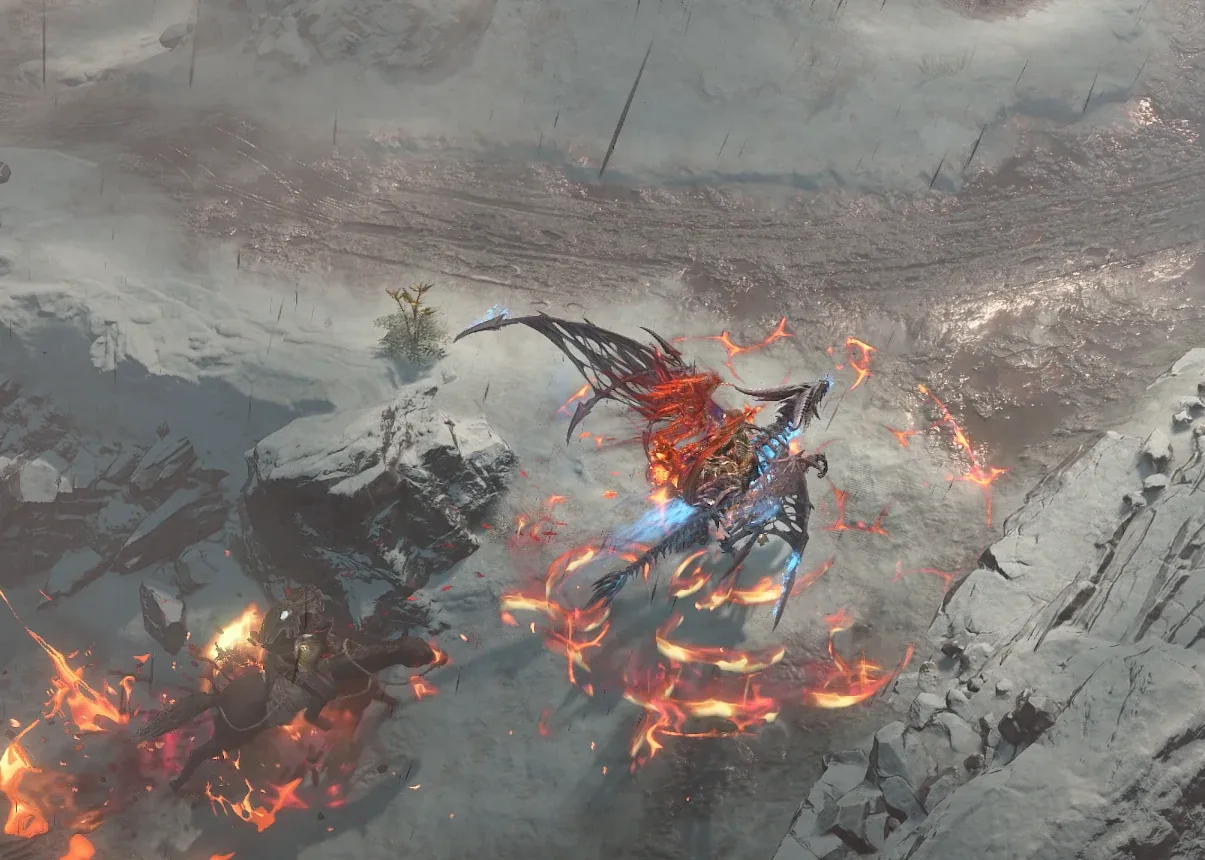
Diablo 4 consists of the base game and two paid expansions. Lord of Hatred already includes Vessel of Hatred.
| Content | What you get |
|---|---|
| Base game | Five classes, the main campaign, the open world and all core activities such as Helltides, Nightmare Dungeons and the Pit |
| Vessel of Hatred | The Spiritborn class, the Nahantu region, Mercenaries, Runewords and the Undercity |
| Lord of Hatred | The Paladin and Warlock classes, the Skovos region with its capital Temis, War Plans, the Horadric Cube, the Talisman, Echoing Hatred and fishing |
Lord of Hatred also brought free updates for all players: the level cap of 70, reworked skill trees, the loot filter, a map overlay with pathfinding and twelve Torment tiers.
Everything the second expansion adds:
Lord of Hatred: Every New Feature of the Diablo 4 Expansion
Season or Eternal Realm?
Before you create your first character, you choose a realm:
- Seasonal Realm: A new season starts every few months. You begin from scratch and get new mechanics, Season Ranks and rewards.
- Eternal Realm: Your characters stay permanently. There is no reset and no season content.
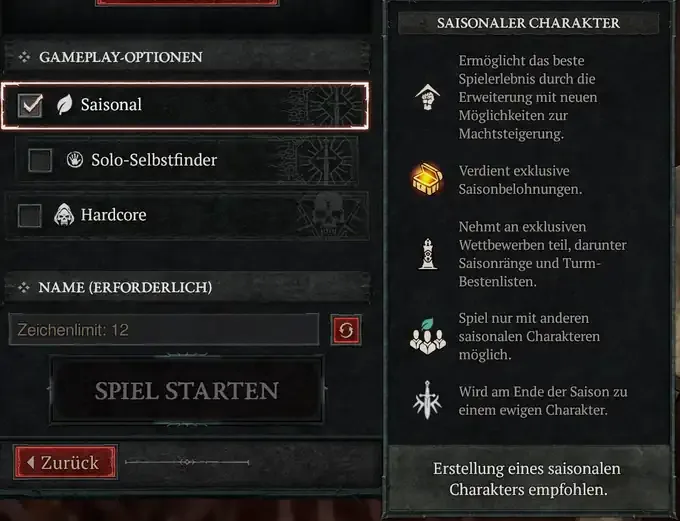
When a season ends, your character moves to the Eternal Realm with its gear and stash. You lose nothing.
Since Season 15 it also works the other way around: with Rebirth you bring a character from the Eternal Realm into the current season. It starts over at level 1. You keep its class, name and appearance, but not its gear or level. Before you start, unequip your gear and empty your inventory. The Rebirth guide explains the details.
Joining mid-season? Go through the Season 15 checklist first.
This Diablo 4 beginner guide only covers the basics of the realms. How they are separated, who you can play with and what Hardcore and Solo Self-Found mean is explained here:
Eternal Realm, Season & Hardcore in Diablo 4 Explained
Choosing the Right Class
Diablo 4 has eight classes. Three of them require an expansion.
| Class | Playstyle | Available with |
|---|---|---|
| Barbarian | Melee with multiple weapons, shouts and raw power | Base game |
| Druid | Shapeshifting into werewolf or werebear, nature magic and companions | Base game |
| Necromancer | Skeleton and golem minions, blood, bone and shadow magic | Base game |
| Rogue | Fast and mobile, melee and ranged attacks, traps | Base game |
| Sorcerer | Fire, cold and lightning from a distance | Base game |
| Spiritborn | Fast martial arts powered by spirit guardians | Vessel of Hatred |
| Paladin | Holy warrior with shield, auras and divine power | Lord of Hatred |
| Warlock | Demons, hellfire and chains | Lord of Hatred |
This Diablo 4 beginner guide has only one rule for picking a class: choose it by how it feels to play, not by the current meta. Build strength changes with every patch. Every class handles the campaign and the start of the endgame without problems.
You can create more characters at any time. You do not have to replay the campaign for each of them.
Play or Skip the Campaign
The campaign tells the story in three parts: the base game, Vessel of Hatred and Lord of Hatred. Whether you play the story depends on what kind of player you are. Some enjoy the story, others want to get into the season action as fast as possible. That is your call. If you play the story, it teaches you the controls, your class and the world. You cannot miss out: you can catch up on the story with another character at any time. If you own Lord of Hatred, you can also start directly with one of the two expansion campaigns.
Once you have finished the campaign with one character, you can skip it on every other character. This works in both realms. During character creation you decide where your character starts. Once you have finished the Lord of Hatred campaign, you can start new characters directly in the endgame if you like.
Play the campaign once, then skip it on every new character.
Difficulty Levels: From Normal to Torment XII
In Diablo 4 you choose a difficulty level. The higher it is, the stronger the monsters. In return you get more experience, more gold and better loot.
| Difficulty | Meant for | Unlock |
|---|---|---|
| Normal | New players and story fans | immediately |
| Hard | a bit more challenge | immediately |
| Expert | faster leveling | after the prologue |
| Penitent | preparing for the endgame | after the prologue |
| Torment I to Torment XII | endgame | through the Pit |
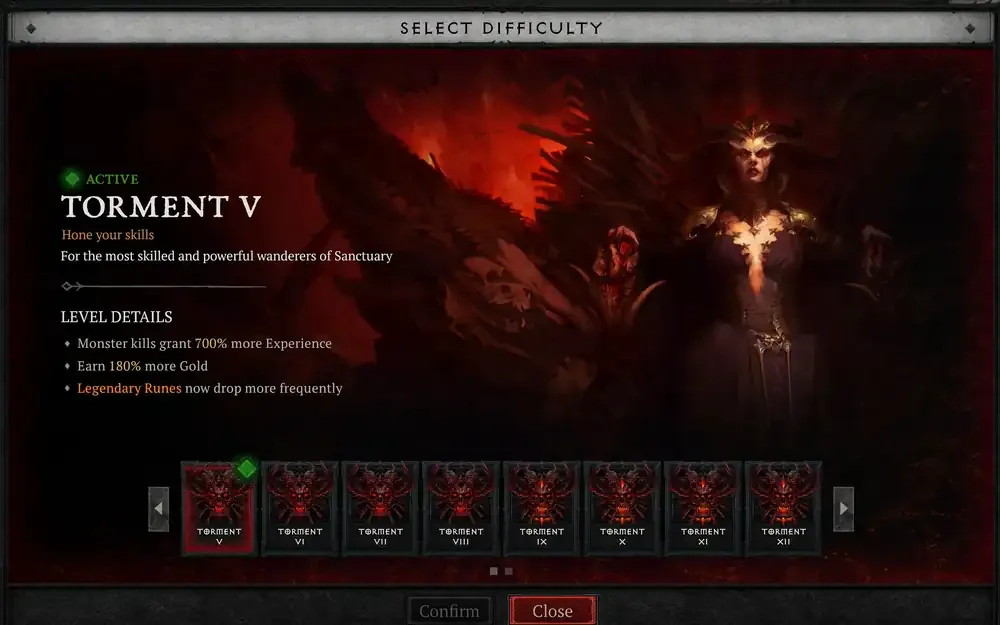 Image source: Blizzard Entertainment
Our advice in this Diablo 4 beginner guide: start on Normal or Hard. If monsters die quickly and you are rarely in danger, go up one level. If it gets too hard, switch back down.
Lord of Hatred expanded Torment from four to twelve tiers. The Torment tiers are the real endgame. From Torment I on, Ancestral items with the highest Item Power drop.
Season Rank and the Pit: How to Unlock the Endgame
In the Seasonal Realm, the Season Rank guides you through the season. Each rank has a list of objectives. At the end of most ranks you face a special dungeon. Clear it and you move up to the next rank. Rewards include skill points, Paragon points and caches with gear. All your seasonal characters share your Season Rank progress.
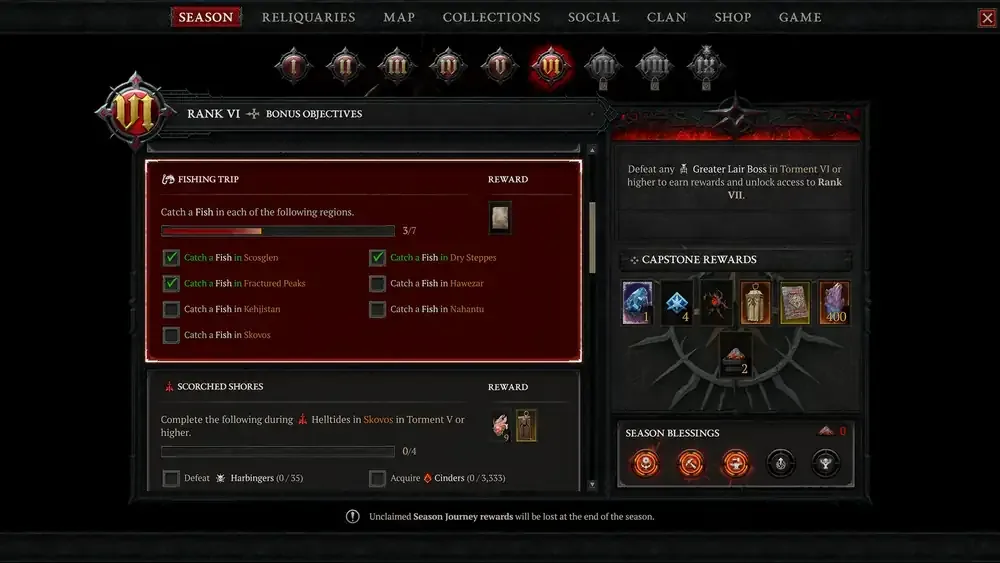 Image source: Blizzard Entertainment
These steps matter on your way to the endgame:
- Complete Season Rank II: The dungeon at the end of Rank II unlocks the Pit.
- Reach level 70: From here on you earn Paragon experience instead of levels.
- Clear Pit tier 10: This opens Torment I.
- Clear higher Pit tiers: Every further Torment tier is tied to a higher Pit tier.
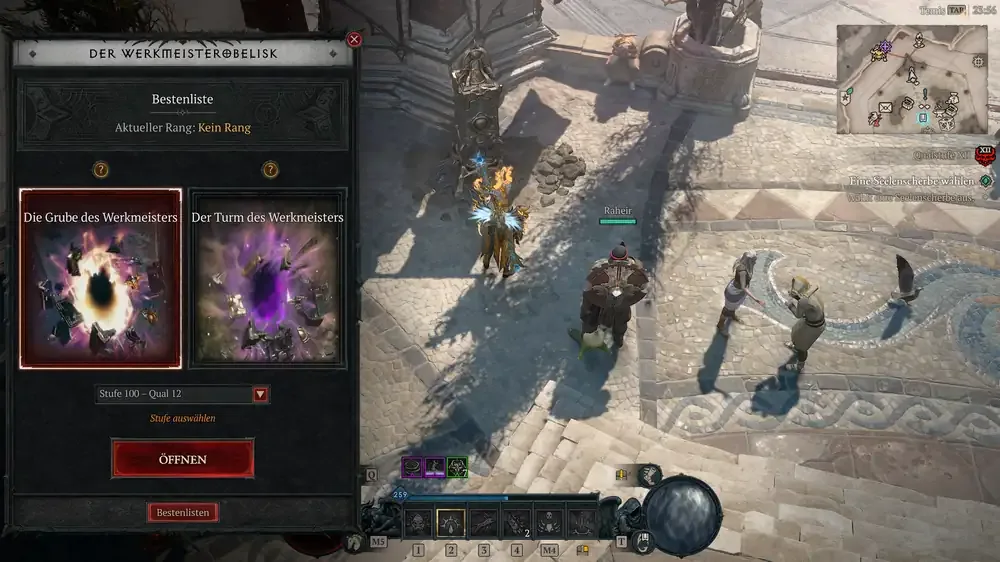
The Eternal Realm has no Season Rank. There, the Pit opens at level 70.
Leveling Builds and Endgame Builds
The combination of skills, gear, Aspects and Paragon is called a build. Every class has many builds. They differ mainly in what they require.
| Phase | Build type | What you need |
|---|---|---|
| Level 1 to 70 | Leveling build | Skills and a few Aspects. Works with whatever you find. |
| After level 70 | Midgame build | Your first Unique items and matching Aspects |
| High Torment tiers | Endgame build | Specific Unique or Mythic Unique items, tempered and masterworked gear, Paragon and Glyphs |
While leveling, you replace your gear all the time. That is why a leveling build works without specific items. In the midgame and endgame this changes. Many strong builds depend on one Unique item or a combination of Aspects. Without those pieces, an endgame plan does little for you. Only switch once you own the required pieces.
Rule of thumb: play the build whose required pieces you already own.
Leveling builds for all eight classes that go with this Diablo 4 beginner guide, with a direct link to the build planner:
Leveling Builds for Diablo 4 Season 15: All 8 Classes
Understanding Gear
Gear is the biggest lever for your power, so it gets plenty of room in this Diablo 4 beginner guide. Every item has a rarity. It tells you how many bonus stats the item can have. These bonus stats are called affixes.
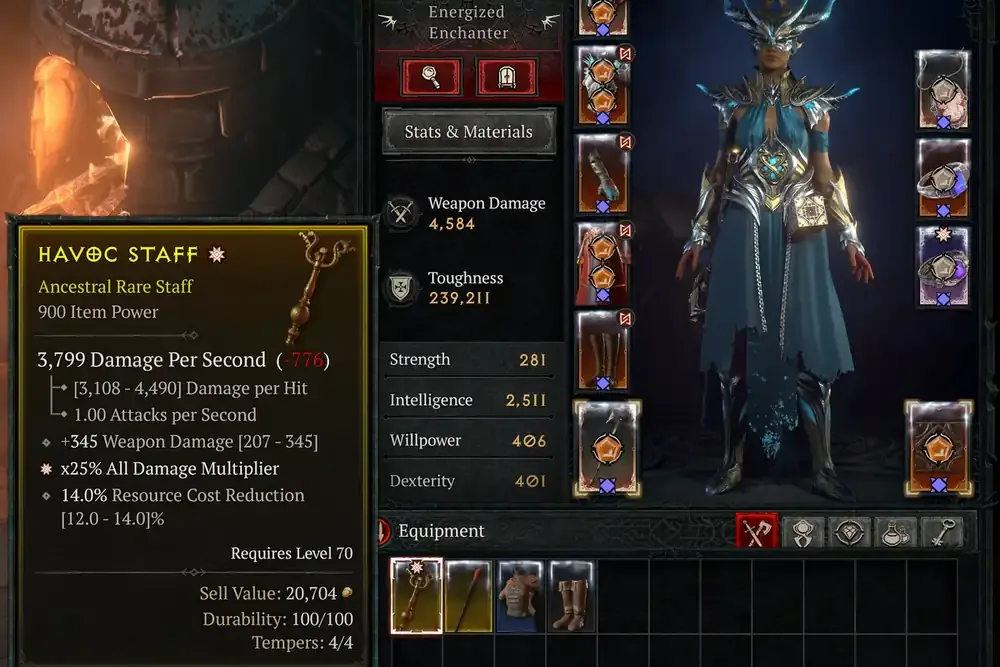 Image source: Blizzard Entertainment
| Rarity | Color | What defines it |
|---|---|---|
| Common | white | Base stats without affixes, an endgame crafting material for the Horadric Cube |
| Magic | blue | a few affixes |
| Rare | yellow | several affixes |
| Legendary | orange | affixes plus a Legendary Aspect with a special effect |
| Unique | gold | a fixed, powerful effect, often the core of a build |
| Mythic Unique | purple | the strongest items in the game |
What this Diablo 4 beginner guide recommends you look for when you pick up loot:
- Affixes over Item Power: A green arrow only means the Item Power is higher. The affixes tell you whether the item helps your build.
- Greater Affixes: Affixes marked with a star are boosted. A Greater Affix on the right stat is very valuable.
- Ancestral items: Ancestral is not a rarity of its own. From Torment I on, items of any rarity can drop as Ancestral, including Magic and Rare items. They have the highest Item Power and make good bases for the Horadric Cube.
- Collect Aspects: Salvage a Legendary item with a new Aspect at the Blacksmith and the Aspect goes into your Codex of Power. From there you can imprint it on other items at the Occultist as often as you like.
Upgrading Gear: The Vendors in Town
Every larger town has vendors who improve your gear.
| Vendor | What you do there |
|---|---|
| Blacksmith | Salvage, repair, Tempering (add an affix you choose) and Masterworking (raise stat values) |
| Occultist | Imprint Aspects from the Codex of Power, enchant one affix |
| Jeweler | Craft gems and add sockets |
| Horadric Cube | Transform and upgrade items and reroll affixes, Lord of Hatred only, in Temis |
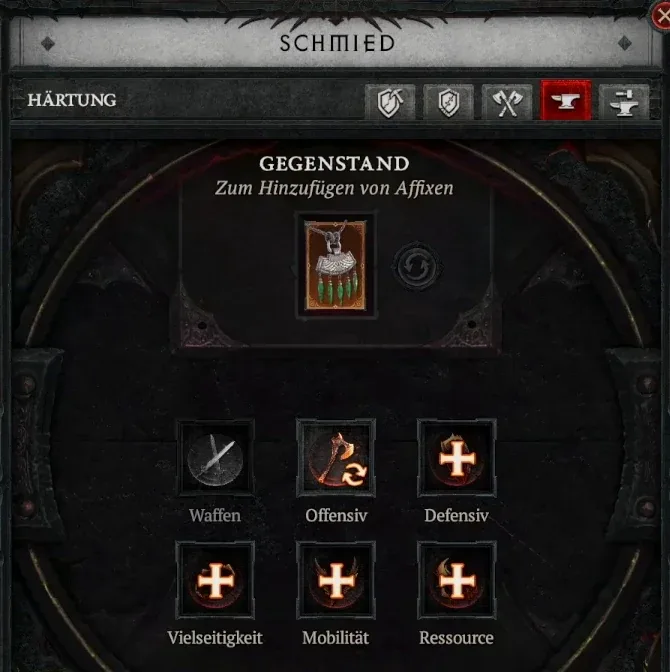
A sensible order: first you need a good base with the right affixes. Then imprint the right Aspect and temper the missing stats. Masterworking comes last because it costs a lot of materials. It is only worth it on items you will wear for a long time.
How Tempering, Masterworking and the Horadric Cube work in detail:
Crafting Guide for Diablo 4: Lord of Hatred Step by Step
Skills, Paragon and Glyphs
Since Lord of Hatred, every active skill has three branches that you unlock step by step while leveling. You pick one variant from each branch. The third branch requires Lord of Hatred. Passive nodes are no longer part of the skill tree. Many former passive effects now live on Aspects and Unique items. You can reset your points at any time.
 Image source: Blizzard Entertainment
From level 70 on, you no longer gain levels. Your experience fills Paragon levels instead. Each Paragon level gives you Paragon points to spend on Paragon boards. Your Paragon levels apply to all characters on your account in the same realm. You socket Glyphs into those boards. A Glyph boosts the nodes within its radius. You upgrade Glyphs after a successful Pit run. Our guide on how to level Glyphs shows how it works and which Glyph to level first.
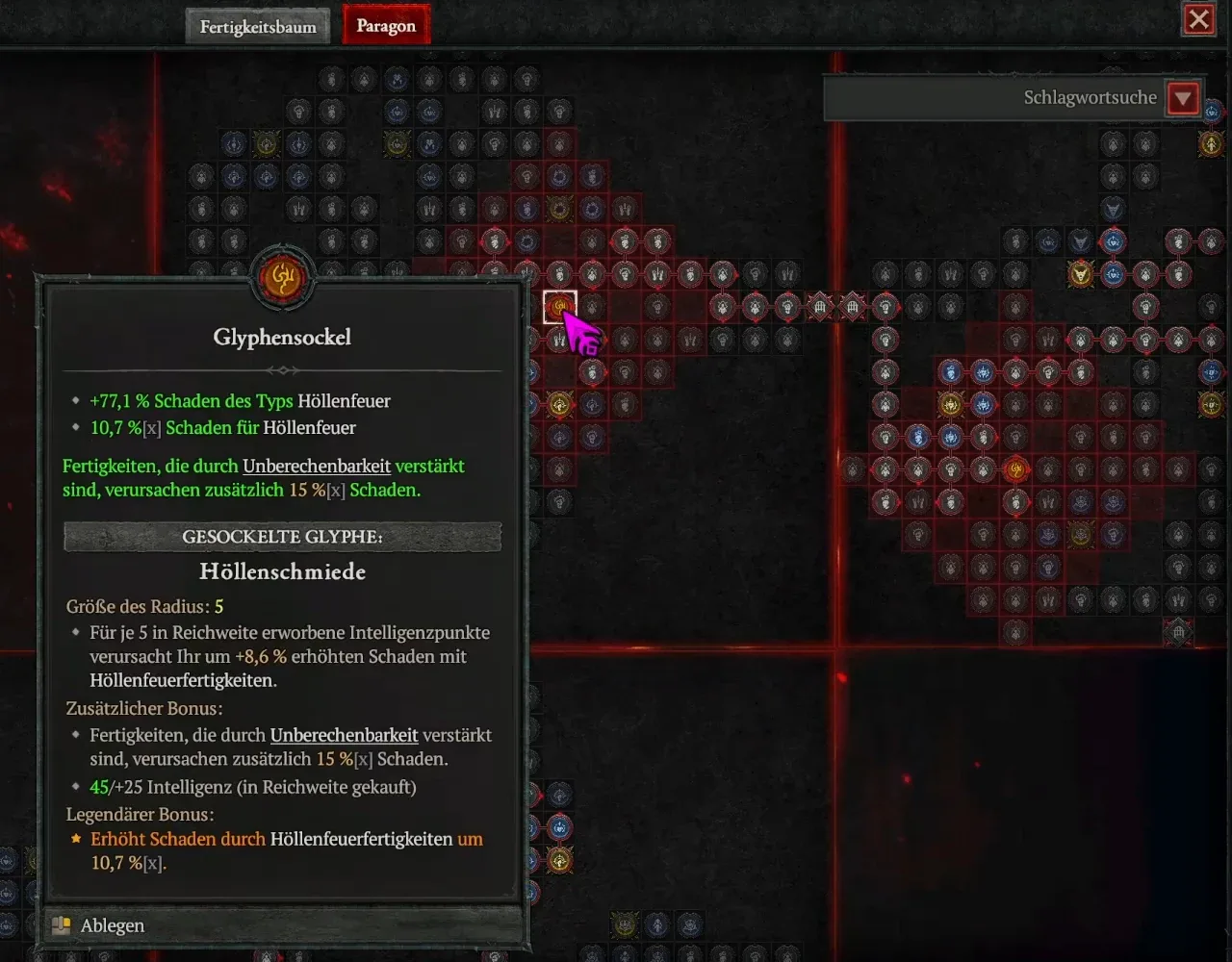
Why your damage goes up or stalls is explained in the damage guide:
Damage Calculation in Diablo 4: How Your Damage Works
Endgame Activities at a Glance
After level 70 you play different activities depending on what you need. The overview in this Diablo 4 beginner guide shows what each activity is good for.
| Activity | Why you play it |
|---|---|
| Helltides | Open world, chests, materials and lots of experience |
| Whispers | Open-world bounties with rewards at the Tree of Whispers |
| Nightmare Dungeons | Dungeons with Sigils and modifiers, materials |
| The Pit | Unlock Torment tiers and upgrade Glyphs |
| Infernal Hordes | Waves of monsters with selectable boons and reward chests |
| The Undercity | Timed runs with Tributes for targeted loot (Vessel of Hatred) |
| Lair Bosses | Farm specific Unique items |
| World Bosses | Powerful open-world bosses for many players |
| Echoing Hatred | Survival challenge for strong characters (Lord of Hatred) |
With Lord of Hatred you link these activities through War Plans. You unlock them through the Lord of Hatred campaign. At the command table in Temis you build a chain of activities and play them one after another. At the end you collect your rewards from the war chest. Each activity also has its own activity tree with bonuses. Your War Plan points are shared by all characters on your account that play in the same realm and game mode.
 Image source: Blizzard Entertainment
Which points to spend first in the activity trees:
War Plans: Best Skill Setups for Every Activity
Tips for Your Start
These tips from the Diablo 4 beginner guide save you a lot of time in your first hours:
- Set up a loot filter: Under Options > Gameplay you can hide loot you do not need. Ready-made filters to import are in our loot filter guide linked below.
- Unlock waypoints: Every new waypoint saves you travel time later.
- Use War Plans once unlocked: After the Lord of Hatred campaign, War Plans are the best way to level further characters. They save travel time and add extra rewards.
- Read tooltips: Skill and Aspect descriptions tell you exactly what they do.
- Play in a group: Many activities go faster and are more fun together.
- Talk to other players: Especially when you are new to Sanctuary, exchanging tips with others helps a lot. Ask your questions on our Discord server or in the German-language streams of Chrix1848 and eRnstl. The community helps each other out.
- Do not neglect defense: If you die a lot, you usually lack Life, Armor or resistances. The defense guide linked below shows how to fix that.
- Do not move up too early: You do not have to farm a Torment tier the moment you unlock it. Play where you progress quickly and safely.
Improve Your Defense in Diablo 4: Survive Higher Torment Tiers
Frequently Asked Questions
Getting Started and Classes
Who is this Diablo 4 beginner guide for?
Does the Diablo 4 beginner guide apply to every season?
Which class is best for beginners?
Do I need the expansions to get started?
Campaign, Returning and Endgame
Do I have to play the campaign?
What has changed for returning players since Lord of Hatred?
When does the endgame start in Diablo 4?
What happens to my seasonal character when the season ends?
Can I play Diablo 4 solo?
Sources
- Prepare for the Reckoning: Lord of Hatred Draws Near · Blizzard News · retrieved October 11, 2026
- Diablo IV Patch Notes · Blizzard News · retrieved October 11, 2026
- Diablo IV Patch Notes (3.0) · Blizzard News · retrieved October 11, 2026
- Celebrate 30 Years of Diablo in Season of Hell's Legacy · Blizzard News · retrieved October 11, 2026
- Diablo IV: What's Next Panel Recap · Blizzard News · retrieved October 11, 2026
Comments
Login to comment.