Blacksmith: All 5 Services, Locations and Costs
Where to find the Blacksmith, what salvaging, repairing and forging give you, and what every service costs.
Blacksmith at a Glance
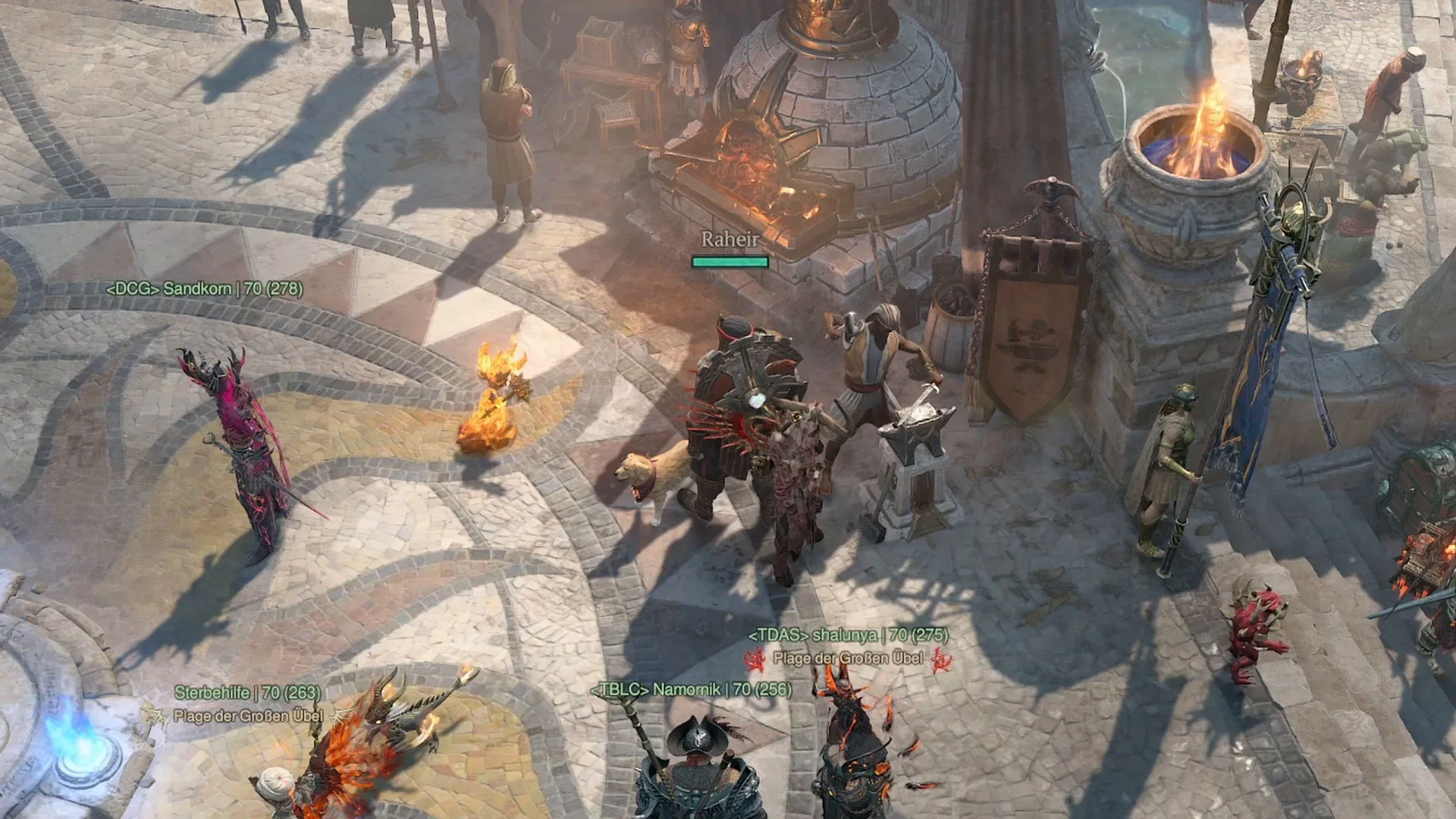
The Blacksmith is the most important crafter for weapons and armor in Diablo 4. You salvage gear into materials, repair damaged items, forge new Magic, Rare and Mythic items and improve your gear with Tempering and Masterworking. You find one in almost every town, marked on the map with an anvil icon.
| Key facts | Blacksmith |
|---|---|
| First encounter | Zivek in Kyovashad, right after the Prologue |
| Locations | almost every town, anvil icon on the map |
| Tabs | Salvage, Repair, Forge Equipment, Tempering, Masterworking |
| Costs | Gold and crafting materials, salvaging is free |
| Mythic Uniques | from Resplendent Sparks, level 70 and Torment only |
How to Unlock the Blacksmith and Where to Find One
You meet your first Blacksmith in Kyovashad as soon as you finish the Prologue. His name is Zivek and he works close to the Waypoint. From then on, every Blacksmith in Sanctuary is open to you, including those in towns you reach later.
All of them offer the same services. You never need to travel to a specific town, just use the nearest anvil on the map. A selection of major towns per region:
| Region | Town | Blacksmith |
|---|---|---|
| Fractured Peaks | Kyovashad | Zivek |
| Scosglen | Cerrigar | Ceitis |
| Dry Steppes | Ked Bardu | Selenga |
| Kehjistan | Gea Kul | Cansu |
| Hawezar | Zarbinzet | Kalere |
| Nahantu | Kurast Docks | Alberik |
| Skovos | Temis | Telines |
Every Blacksmith Service Explained
The crafting window has five tabs. You use three of them from your first hour, while Tempering and Masterworking matter later.
| Tab | What you do there | Useful from |
|---|---|---|
| Salvage | break items down into crafting materials | right away |
| Repair | restore Durability for Gold | right away |
| Forge Equipment | craft Magic, Rare and Mythic items | Magic at level 1, Rare at level 15, Mythic at level 70 |
| Tempering | add one extra affix to an item | level 15 |
| Masterworking | raise an item's quality and with it all of its stats | level 60 |
Salvage: Turn Gear into Materials
Salvaging breaks items you no longer need down into crafting materials, free of charge. What you get depends on rarity and item type: armor gives  Rawhide, weapons and jewelry give
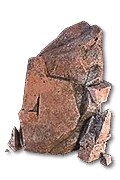 Iron Chunk. From Rare upward you also get
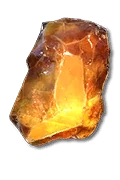 Veiled Crystal.
| Rarity | Armor | Weapons | Jewelry |
|---|---|---|---|
| Common, Magic | Rawhide | Iron Chunks | Iron Chunks |
| Rare | Rawhide, Veiled Crystals | Iron Chunks, Veiled Crystals | Iron Chunks, Veiled Crystals |
| Legendary, Unique | Veiled Crystals, Coiling Wards | Veiled Crystals, Baleful Fragments | Veiled Crystals, Abstruse Sigils |
| Ancestral | plus Forgotten Souls | plus Forgotten Souls | plus Forgotten Souls |
| Mythic Unique | plus 1 Resplendent Spark | plus 1 Resplendent Spark | plus 1 Resplendent Spark |
Legendary items give 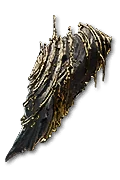 Coiling Ward,
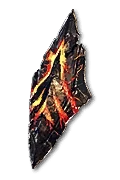 Baleful Fragment or Abstruse Sigil depending on the slot. Ancestral items, which drop in the Torment tiers, also give
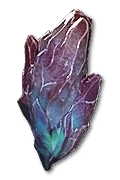 Forgotten Soul. The exact amounts are random.
Salvaging also does the following:
- Unlocks the look: The item's appearance goes into your Wardrobe for transmog.
- Saves Aspects: Legendary items add their Aspect to the Codex of Power or upgrade a weaker roll there.
- Returns Gems: Socketed Gems go back into your inventory.
- Refunds Obducite: Masterworked items return part of the
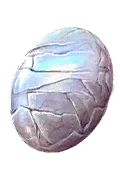 Obducite you spent.
Loot Filter for Diablo 4 Season 15: 4 Import Codes + Guide
Repair: Durability and Repair Costs
Every time you revive after a death, your gear loses 10% Durability. Below 25% the game warns you, and at 0% an item is broken and much less effective in combat.
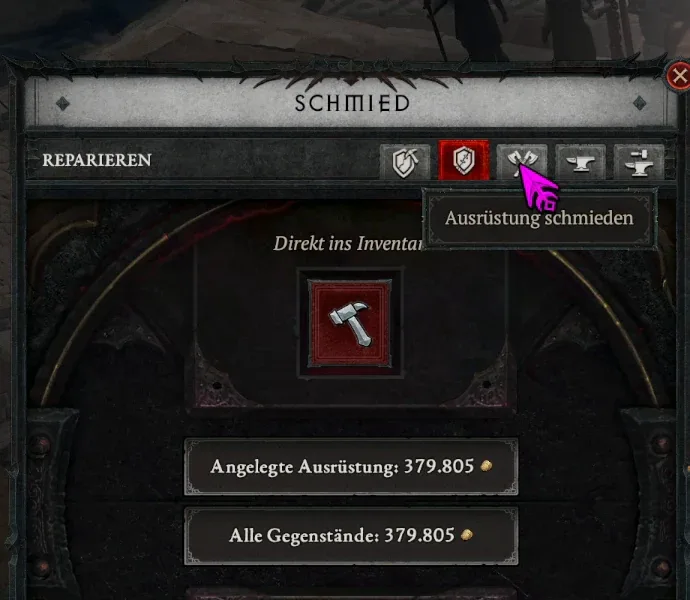
In the Repair tab you restore Durability for Gold, either for your equipped gear only or for all items. The more damaged your gear is, the more Gold the repair costs.
Forge Equipment: Magic, Rare and Mythic Items
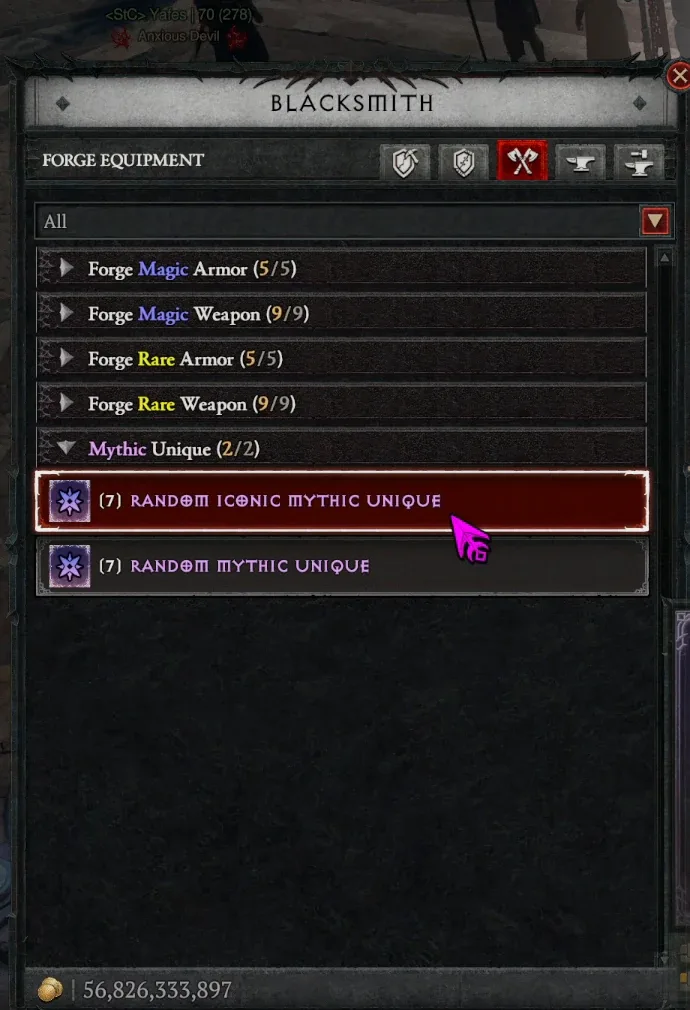
The Forge Equipment tab lets you craft new items. You pick rarity and item type, and the game rolls the result. You only see weapon types your class can use.
- Magic and Rare armor: Helm, Chest Armor, Gloves, Pants and Boots.
- Magic and Rare weapons: every weapon type of your class, including Shield, Focus and Totem.
- Mythic Unique: a random Mythic Unique or a random Iconic Mythic Unique, both valid for your class.
 Resplendent Spark
You pay for Mythic Uniques with Resplendent Sparks. You get one Spark for every Mythic Unique you salvage. Items forged here do not get the Crafted tag, so you can equip several of them at once. For more ways to get Mythic Uniques, see this guide:
Mythic Farming in Diablo 4 Season 15: Best Methods
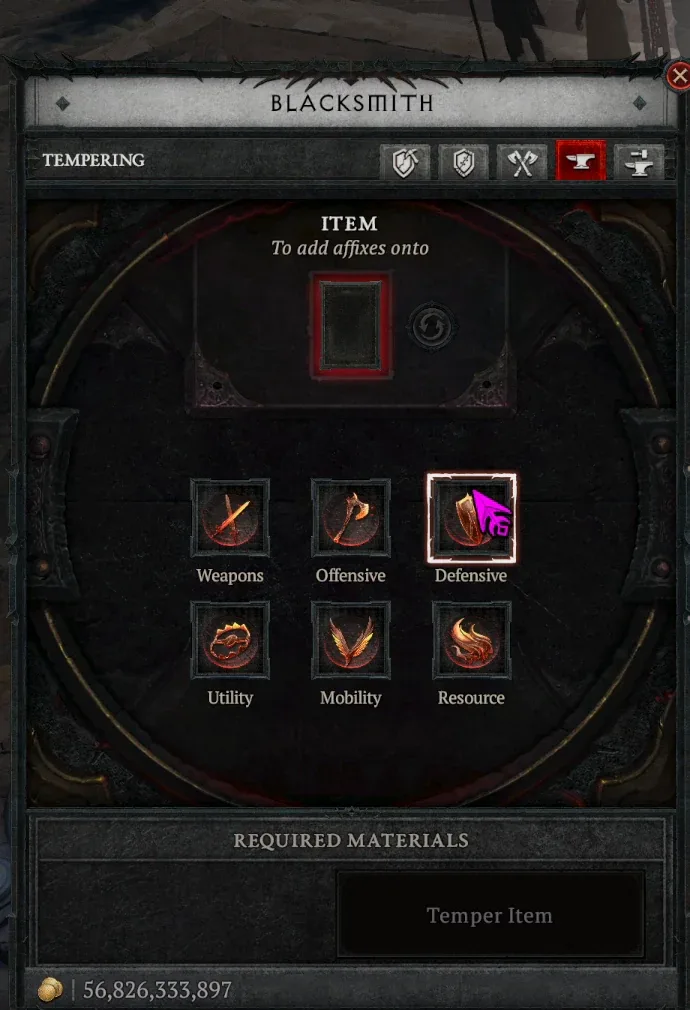
Tempering at the Blacksmith
Tempering adds one extra affix to an item, taken from a Temper Manual you have learned. You unlock the tab at level 15 with the Priority Quest "Tempering". Charges, categories and costs are covered in the Tempering guide: Tempering: Temper Manuals, Charges and Costs.
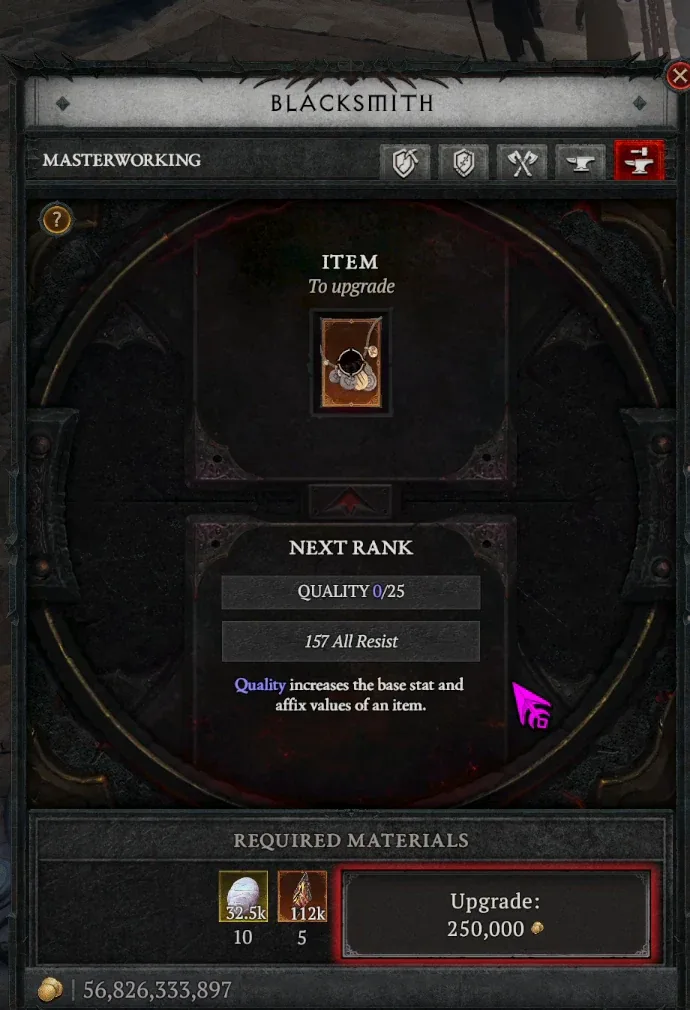
Masterworking at the Blacksmith
Masterworking raises an item's quality up to 25, and every point increases base stats and affixes by 1%. At quality 25, one random affix also gets 50% stronger. Costs, Obducite and rerolling are covered in the Masterworking guide: Masterworking: Quality 25, Masterwork Affix and Costs.
How Much Does the Blacksmith Cost?
Salvaging is free, everything else costs Gold and materials. Two-handed weapons cost twice the materials when forged.
| Service | Cost | Note |
|---|---|---|
| Salvage | free | returns materials |
| Repair | Gold | depends on how damaged your gear is |
| Forge a Magic item | 1,000 Gold, 50 Rawhide or Iron Chunks | in Torment also 10 Forgotten Souls |
| Forge a Rare item | 5,000 Gold, 50 Rawhide or Iron Chunks, 20 Veiled Crystals | in Torment also 20 Forgotten Souls |
| Forge a Mythic Unique | 3 Resplendent Sparks | level 70, Torment only |
| Tempering | Gold and materials by rarity | see Tempering guide |
| Masterworking | Gold, Obducite and materials per step | see Masterworking guide |
How to Use the Blacksmith Step by Step
- Mark useless items as Junk while you play.
- Before salvaging, check every item with a Greater Affix: it may be a good base for the Horadric Cube.
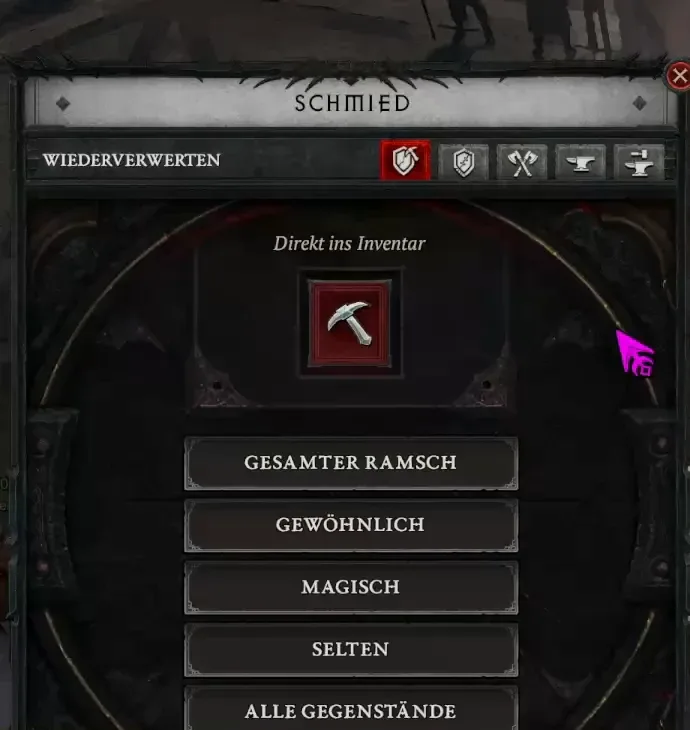
- Salvage the rest at the nearest anvil, fastest with the buttons in the tab.
- Repair your gear during the same visit.
- For your endgame gear: Temper first, then Masterwork.
- Salvage spare Mythic Uniques into Resplendent Sparks and forge new ones from them.
Crafting Guide for Diablo 4: Lord of Hatred Step by Step
What to Do After the Blacksmith
The Blacksmith is only one step in improving your gear. Sockets and Gems are handled by the Jeweler: Jeweler: What Do Gems, Sockets and Runes Cost?. You imprint Aspects and enchant affixes at the Occultist: .
Every Horadric Cube recipe with ingredients and results is listed in the Horadric Cube database. All Blacksmith materials are in the database under Crafting Materials.
Common Blacksmith Mistakes
- Salvaging good bases: Magic and Rare items with a Greater Affix are valuable since Lord of Hatred. Check them before you salvage.
- Playing with broken gear: A broken item is much less effective in combat. Repair right after several deaths.
- Pressing "All Items" blindly: The button salvages everything in your inventory that is not protected. Clean up first.
- Masterworking before Tempering: Temper first so Masterworking also boosts your tempered affix.
- Hoarding duplicate Mythics: Every salvaged Mythic Unique gives you a Resplendent Spark toward the next one.
Blacksmith FAQ
Where do I find the Blacksmith?
Should I sell or salvage items?
What happens when my gear breaks?
Can I craft Mythic Uniques at the Blacksmith?
Can the Blacksmith craft rings and amulets?
Sources
- The 3.2.0 PTR: What You Need to Know, Blizzard News, accessed November 2, 2026
- Diablo IV Patch Notes 2.5, Blizzard News, accessed November 2, 2026
- Crafting Materials database, d4guides.gg, accessed November 2, 2026
- Crafting Guide for Lord of Hatred, d4guides.gg, accessed November 2, 2026
Changelog
- November 2, 2026, Patch 3.2.4: Guide created.
Comments
Login to comment.